Stinging insect remediation in central Illinois requires strict alignment with the seasonal reproductive cycle of social vespids. Spring queens emerge from overwintering sites in April to construct embryonic nests…
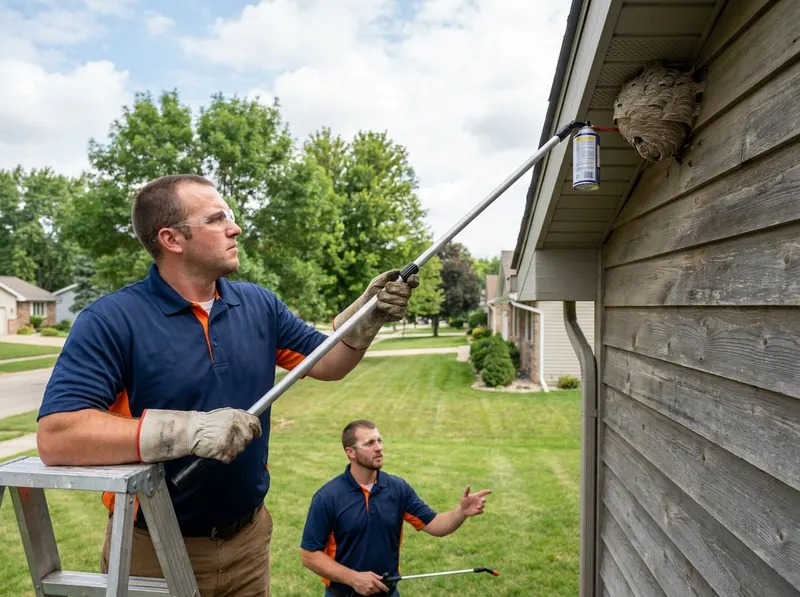
Stinging insect remediation in central Illinois requires strict alignment with the seasonal reproductive cycle of social vespids. Spring queens emerge from overwintering sites in April to construct embryonic nests under historic fascia boards in Enos Park and Vinegar Hill. Unchecked colonies peak between July and September, expanding to thousands of individuals requiring structural interception. Paper wasps build open-comb hexagonal cells beneath soffits, window headers, and wooden deck railings in residential pockets like Hawthorne and Westchester. In contrast, bald-faced hornets establish expansive aerial carton nests suspended from mature oak canopies near Washington Park Botanical Garden. Yellowjackets present dual risks: ground nests in root cavities along Carpenter Park Nature Preserve and hidden structural nests within drywall voids and attic insulation in Leland Grove homes.
A single-nest exterior intervention resolves localized threats where nests remain visible and physically accessible beneath 20 feet. Wall void infestations demand micro-injector application of pyrethroid or desiccant dust directly through exterior masonry weep holes, brick ties, or siding joints before nest material extraction occurs. Spraying expanding aerosol foam into siding gaps traps insects inside wall cavities, chewing through sheetrock into interior bedrooms. Direct dust permeation neutralizes the brood and defensive workers simultaneously. Subterranean yellowjacket extraction involves locating secondary relief tunnels, injecting residual liquid compounds under pressure, and excavating the core comb structure to eliminate surviving pupae.
Technicians carry HEPA-filtered vacuum extractors, specialized non-conductive extension poles up to 30 feet, and enclosed containment vessels to ensure safe extraction without dispersing agitated foragers into adjacent yards. All perimeter treatments utilize low-odor pyrethroids and synthetic pyrethrins approved by the Illinois Department of Public Health for structural use around occupied dwellings. Following physical detachment of the nest, technicians apply an active chemical residue over the attachment footprint to break the chemical pheromone trail, stopping newly returning foragers from initiating reconstruction on that anchor point.
Every job gets a firm, written price after a free on-site visit.
Tell us about your seasonal wasp, hornet & yellowjacket extraction job in Springfield and we'll send a clear, written quote, usually the same day.
 PestBoss Pros